

The Healing Wallet
A weekly blog focusing on financial guidance to help you manage wealth, advance your career, and integrate your faith.
Presented by Integritas Wealth Strategies
By Daniel Heidel
Issue No. 2
Biblical Budgeting: The Envelope Method for Modern Christians
Jesus managed resources perfectly with 12 disciples—you can manage yours too.
When Jesus fed the 5,000 with just five loaves and two fish, He didn’t waste a single crumb—His disciples collected twelve baskets of leftovers. This miraculous multiplication demonstrates a profound truth: God cares about stewardship, resourcefulness, and wise management of what He provides. Yet many Christians today struggle with budgeting, feeling overwhelmed by modern financial complexities while longing for a system that aligns with their faith values. The envelope method, rooted in biblical principles of stewardship and intentional living, offers a time-tested solution that transforms chaotic finances into organized, purposeful money management.
The Biblical Foundation of Envelope Budgeting
Scripture is filled with wisdom about money management that perfectly aligns with envelope budgeting principles. Proverbs 27:23 instructs us to “know well the condition of your flocks, and give attention to your herds,” emphasizing the importance of actively monitoring our resources. The envelope method embodies this principle by requiring us to allocate every dollar to a specific purpose before spending it.
Luke 14:28 asks, “For which of you, desiring to build a tower, does not first sit down and count the cost, whether he has enough to complete it?” This verse captures the essence of envelope budgeting—planning ahead and ensuring we have adequate resources for our commitments before we begin.
The envelope system also reflects the biblical principle of contentment found in Philippians 4:11-12, where Paul writes about learning to be content in every circumstance. By allocating specific amounts to each category and staying within those limits, we practice contentment with what God has provided while avoiding the trap of overspending.
Traditional vs. Digital Envelope Systems
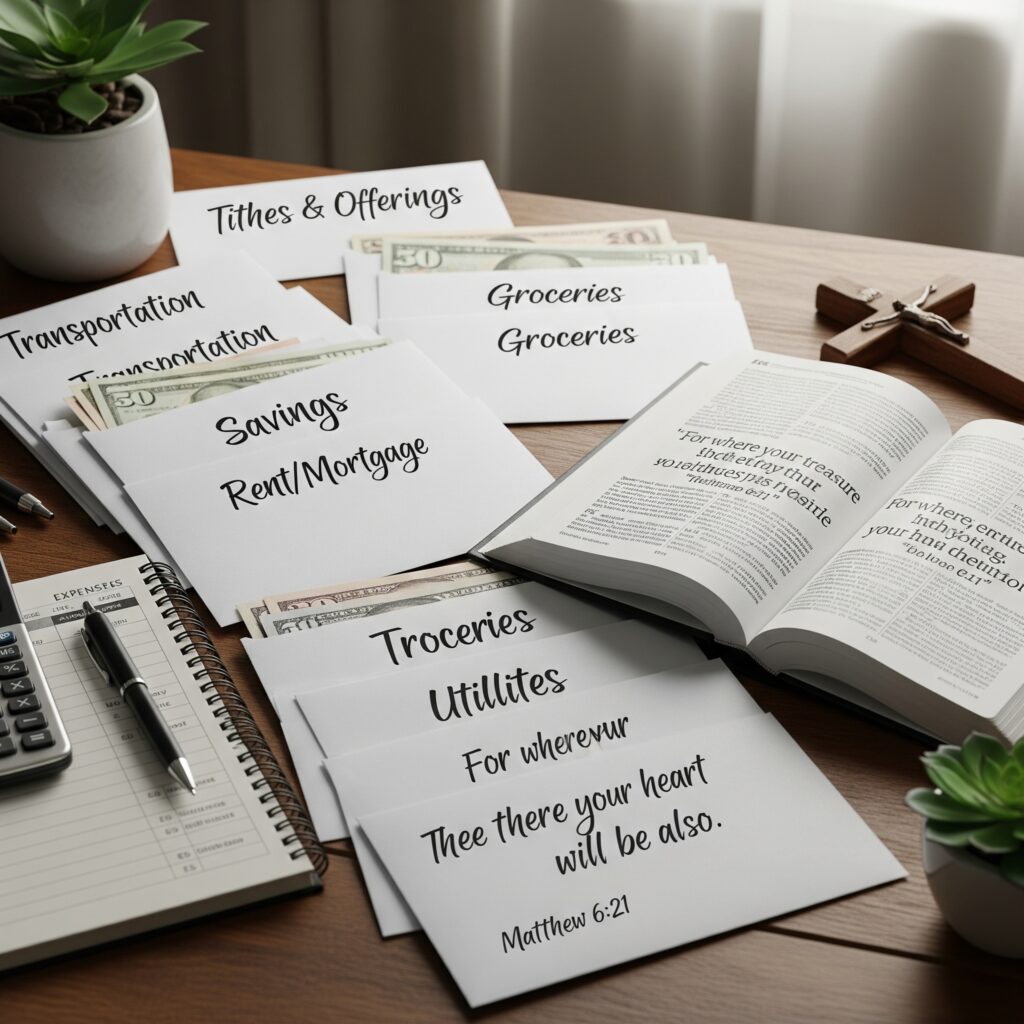
The original envelope method involved physically placing cash into labeled envelopes for different spending categories—groceries, gas, entertainment, clothing. When an envelope was empty, spending in that category stopped until the next budget cycle. This tangible approach provided clear visual feedback and made overspending nearly impossible.
Modern digital envelope systems maintain these core principles while adapting to our increasingly cashless society. Apps like Faithfi, YNAB (You Need A Budget), EveryDollar, and Goodbudget allow you to create virtual envelopes that track spending across debit cards, credit cards, and electronic payments. These digital solutions offer several advantages: automatic transaction categorization, real-time balance updates, and the ability to easily adjust allocations when circumstances change.
For Christians who prefer a hybrid approach, consider using cash envelopes for variable categories like groceries and entertainment while managing fixed expenses like utilities and mortgage payments digitally. This combination provides the psychological benefit of physical cash limitations while maintaining the convenience of electronic bill management.
Percentage-Based Budgeting with Biblical Priorities
The 50/30/20 budget rule provides a solid framework, but Christian families often need to adjust these percentages to reflect biblical priorities. Consider this faith-based modification: 10% for tithing and offerings, 50% for needs (housing, utilities, food, transportation), 20% for savings and debt repayment, and 20% for wants and additional giving.
This approach ensures that giving to God comes first, as instructed in Proverbs 3:9: “Honor the Lord with your wealth and with the firstfruits of all your produce.” By prioritizing tithing, we acknowledge God’s ownership of all our resources and invite His blessing on our financial management.
The “needs” category should include true necessities that align with 1 Timothy 6:8: “But if we have food and clothing, with these we will be content.” Be honest about distinguishing between needs and wants—that premium cable package might feel necessary, but it’s likely a want that belongs in the 20% category.
Your savings envelope should include both emergency fund building and long-term wealth building. Proverbs 21:20 reminds us that “precious treasure and oil are in a wise man’s dwelling, but a foolish man devours it.” Building financial reserves demonstrates wisdom and prepares us to weather unexpected storms without compromising our giving or going into debt.
Managing Variable Income from Shifts and Call Pay
Healthcare professionals, freelancers, and many other Christians face the challenge of irregular income that makes traditional budgeting difficult. The envelope method adapts beautifully to variable income through strategic planning and conservative estimates.
Start by calculating your lowest expected monthly income based on guaranteed hours or minimum contracted work. Build your baseline budget using this conservative figure, ensuring all essential envelopes are funded at this level. This approach guarantees you can meet your obligations even during slower months.
When bonus income arrives—whether from extra shifts, call pay, or seasonal work—resist the temptation to spend it immediately. Instead, use the “envelope priority system”: first, ensure all baseline envelopes are fully funded, then distribute extra income according to predetermined priorities. Consider this allocation strategy for surplus income: 10% additional giving, 40% emergency fund or debt payoff, 30% long-term savings and investments, and 20% for wants or larger purchases you’ve been planning.
This system transforms variable income from a source of stress into a tool for accelerated financial progress. During high-income months, you’ll build significant reserves and pay down debt faster. During lean months, you’ll have the security of knowing your essentials are covered.
Seasonal Budgeting for Christian Families
Christian families face unique seasonal financial pressures that require intentional planning. Christmas, Easter, vacation Bible school, summer camps, mission trips, and church conferences all create predictable but concentrated expenses that can derail budgets if not properly anticipated.
Create dedicated seasonal envelopes that you fund throughout the year. For Christmas, divide your total expected spending by 12 and allocate that amount monthly to a Christmas envelope. If you plan to spend $1,200 on Christmas gifts, decorations, and special meals, contribute $100 monthly starting in January.
Similarly, establish envelopes for mission trips, summer camps, and other recurring Christian activities. Many families find it helpful to create a “ministry opportunities” envelope that covers unexpected giving opportunities, special offerings, and support for missionaries or church members in need.
Don’t forget to budget for church-related social events, potluck contributions, and gifts for pastoral staff. These expenses, while individually small, can add up significantly over the year.
Apps and Tools for Christian Budgeting
Several budgeting apps cater specifically to Christian families or easily accommodate faith-based budgeting priorities. Faithful and YNAB (You Need A Budget) excels at envelope-style budgeting with its “give every dollar a job” philosophy that aligns perfectly with biblical stewardship principles. The app’s reporting features help you track giving patterns and identify opportunities for increased generosity.
EveryDollar, created by Dave Ramsey’s team, offers a simple zero-based budgeting approach that works well for Christians following his biblically-based financial principles. The free version provides essential envelope functionality, while the paid version adds bank connectivity and detailed reporting.
For families preferring a more specialized approach, consider apps like Goodbudget, which specifically replicates the envelope method digitally, or Mint, which offers robust categorization and goal-setting features ideal for tracking multiple savings objectives.
Many Christian families also benefit from combining digital tools with physical accountability methods. Consider using a simple spreadsheet to track monthly giving goals, debt payoff progress, and long-term savings milestones. The key is finding a system you’ll actually use consistently.
Implementing Your Biblical Budget
Starting an envelope budget requires initial setup time but pays dividends in reduced financial stress and increased purposeful spending. Begin by tracking your current spending for at least one month to understand your actual patterns. Many people are surprised by how much they spend on categories they rarely consider.
Next, list all your income sources and essential expenses. Create envelopes for fixed costs like housing, utilities, and insurance, then establish variable envelopes for groceries, gas, and discretionary spending. Don’t forget envelopes for irregular expenses like car maintenance, medical costs, and home repairs.
Start with slightly larger envelope amounts than you think you need—it’s easier to reduce allocations than to constantly exceed them. After a few months, you’ll develop a realistic understanding of your true spending patterns and can adjust accordingly.
Overcoming Common Obstacles
The most common challenge with envelope budgeting is the temptation to “borrow” from one envelope to cover shortfalls in another. While some flexibility is necessary, frequent transfers indicate unrealistic initial allocations or lack of spending discipline.
When you must transfer money between envelopes, do so intentionally and prayerfully. Ask yourself: “Is this transfer addressing a legitimate need or enabling poor spending habits?” Document transfers and review them monthly to identify patterns that need addressing.
Another common obstacle is spouse disagreement about envelope allocations. Resolve this through prayer, honest communication, and compromise. Consider giving each spouse a personal “fun money” envelope with no questions asked, while requiring joint decisions for larger envelope adjustments.
The Spiritual Benefits of Envelope Budgeting
Beyond financial benefits, envelope budgeting cultivates spiritual disciplines that strengthen your relationship with God. The practice develops contentment, as you learn to live within predetermined limits. It encourages gratitude, as you become more aware of God’s provision. It builds trust, as you experience God’s faithfulness in meeting your needs when you honor Him with your resources.
The system also prepares you for increased generosity. When you know exactly how much you have allocated for each category, you can confidently give when opportunities arise, knowing your other obligations are covered.
Building Long-Term Wealth Through Discipline
Envelope budgeting isn’t just about managing monthly expenses—it’s about building long-term financial stability that enables greater kingdom impact. As you master the discipline of living within your means, you’ll find yourself naturally accumulating wealth that can be deployed for God’s purposes.
Consider creating envelopes for long-term goals like home down payments, children’s education, and retirement savings. These envelopes transform abstract financial goals into concrete, fundable objectives that receive regular attention and resources.
Your Next Steps Toward Financial Freedom
The envelope method offers a practical, biblically-grounded approach to money management that can transform your financial life. By allocating every dollar to a specific purpose, you’re practicing the stewardship God calls us to while building habits that lead to long-term financial success.
Remember, the goal isn’t perfect budgeting—it’s faithful stewardship that honors God and serves your family’s needs. Start small, be patient with yourself as you develop new habits, and celebrate the progress you make along the way.
Ready to transform your financial chaos into purposeful stewardship? Schedule a consultation to discover how biblical financial principles can revolutionize your money management and increase your capacity for kingdom giving.
Updates & Announcements
New Additions
My vision for Integritas is to constantly offer more value to clients and do so with integritas (integrity). Learn about what’s new!
- Trust & Will: Clients can now receive a will and trust as part of their estate plan package included in the cost of their financial planning fee.
- Announcement: Updates are in the works to further build out the planning experience and continuously improve! Stay in touch to learn more.
Daniel Heidel
Integritas Wealth Strategies, LLC
The information contained in this newsletter is purely for education purposes and should not be construed as financial advice. You should consult your tax advisor and attorney for any specific advice and recommendations relating to your situation.